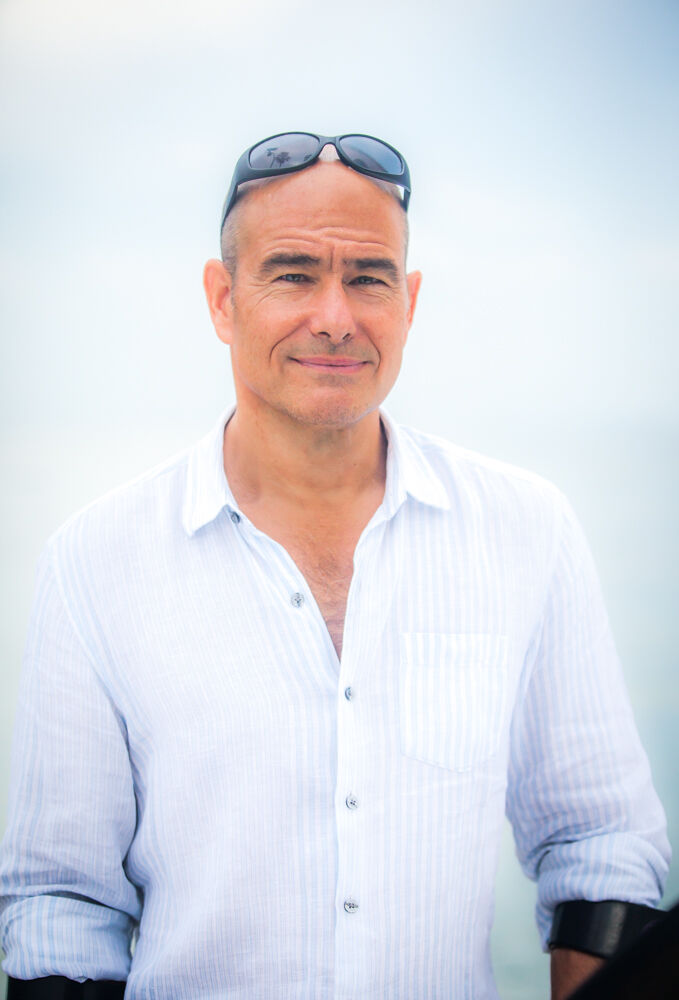
Gregory Burns PLY (born Washington D.C., based in Singapore) is a two-time Paralympic Gold Medalist (both gold medals at Atlanta 1996), five-time world swimming record holder, three-time Paralympian (Barcelona 1992, Atlanta 1996, Sydney 2000), recipient of the IPC Certificate of Recognition and holder of the post-nominal letters PLY (Paralympian for Life), internationally exhibited fine artist with works shown in 15 or more countries across six continents, keynote speaker and resilience educator, two-time TEDx speaker, member of the IOC Olympic Education Commission, recipient of the 2016 Sports Artist of the Year Award, and commissioned artist for the International Olympic Foundation for the Tokyo 2020 Olympic and Paralympic Games. He holds a Master of Fine Arts in Painting from RMIT University (Royal Melbourne Institute of Technology) and a Bachelor of Arts in Communication Studies from the University of California. He has painted across 60 countries, held more than 80 exhibitions, published three books in English and Mandarin, and been featured by CNN, BBC, CNBC, ESPN, Time Magazine, the Asian Wall Street Journal, and The China Daily. As a keynote speaker he advises organizations on resilience, creativity, leadership under uncertainty, and disability inclusion. His official website is gregoryburns.com.
Chapter One — Beginnings
"Maximize what you have."
He got in the water at five. He picked up a paintbrush at six. Sixty countries later, Gregory still swims and paints.
At one year old, three months after moving to Jerusalem, Gregory contracted polio. He has never walked without leg braces and crutches — so his arms have carried him up mountain trails, through IronMan finish lines, across marathon courses and into studios where Chinese painting masters work the way they have for a thousand years. The disability is a fact but has never been the center of gravity. Instead, it served as a catalyst.
No one handed him a ceiling. That absence — not being told what wasn't possible — is the single most significant factor in everything that followed. The stories we hear about what is possible becomes the story we live. He knows this firsthand.
Chapter Two — The Athlete
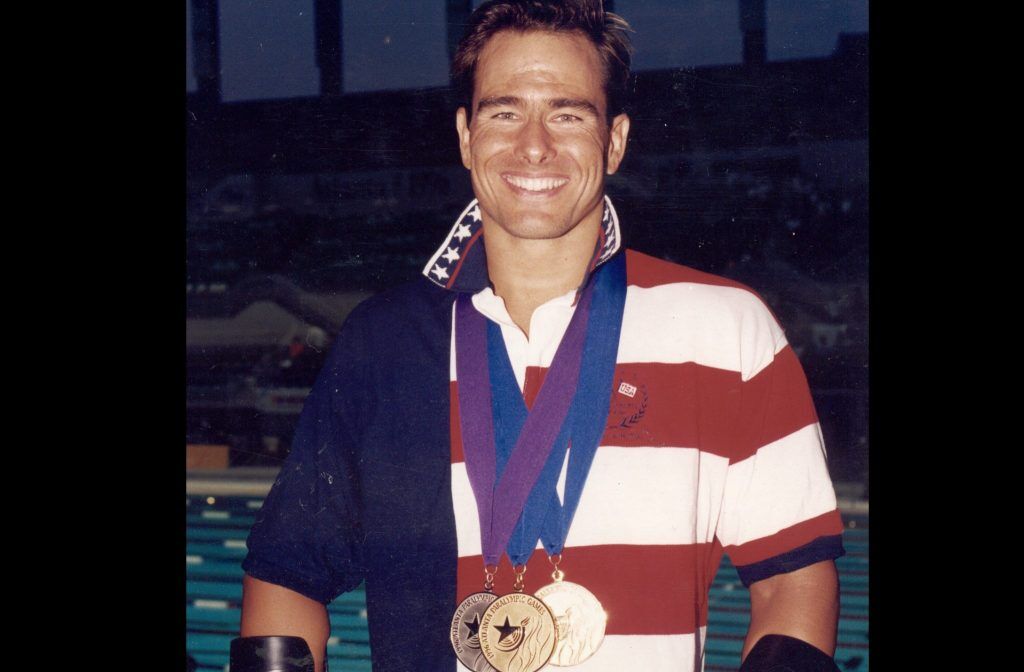
Gregory competed at three Paralympic Games and came home with five medals — two gold and a silver from Atlanta 1996, a silver and bronze from Barcelona 1992. During his 27-year swimming career he set five world records. On the way to those medals he trained alone in Hong Kong, working two full-time jobs, with no institutional support and no certainty of selection. Just the pool, the alarm clock, and the decision to show up.
The athlete in him is not a chapter that closed — it is the frame through which he understands commitment, output, and what happens when the outcome is uncertain. In 1984, he finished the Honolulu Marathon in sixteen hours, dead last. Between 2006 and 2012, he completed four Half-IronMan triathlons and one full IronMan. These are not credentials. They are evidence of a discipline — the one that now runs beneath every keynote or workshop he delivers.
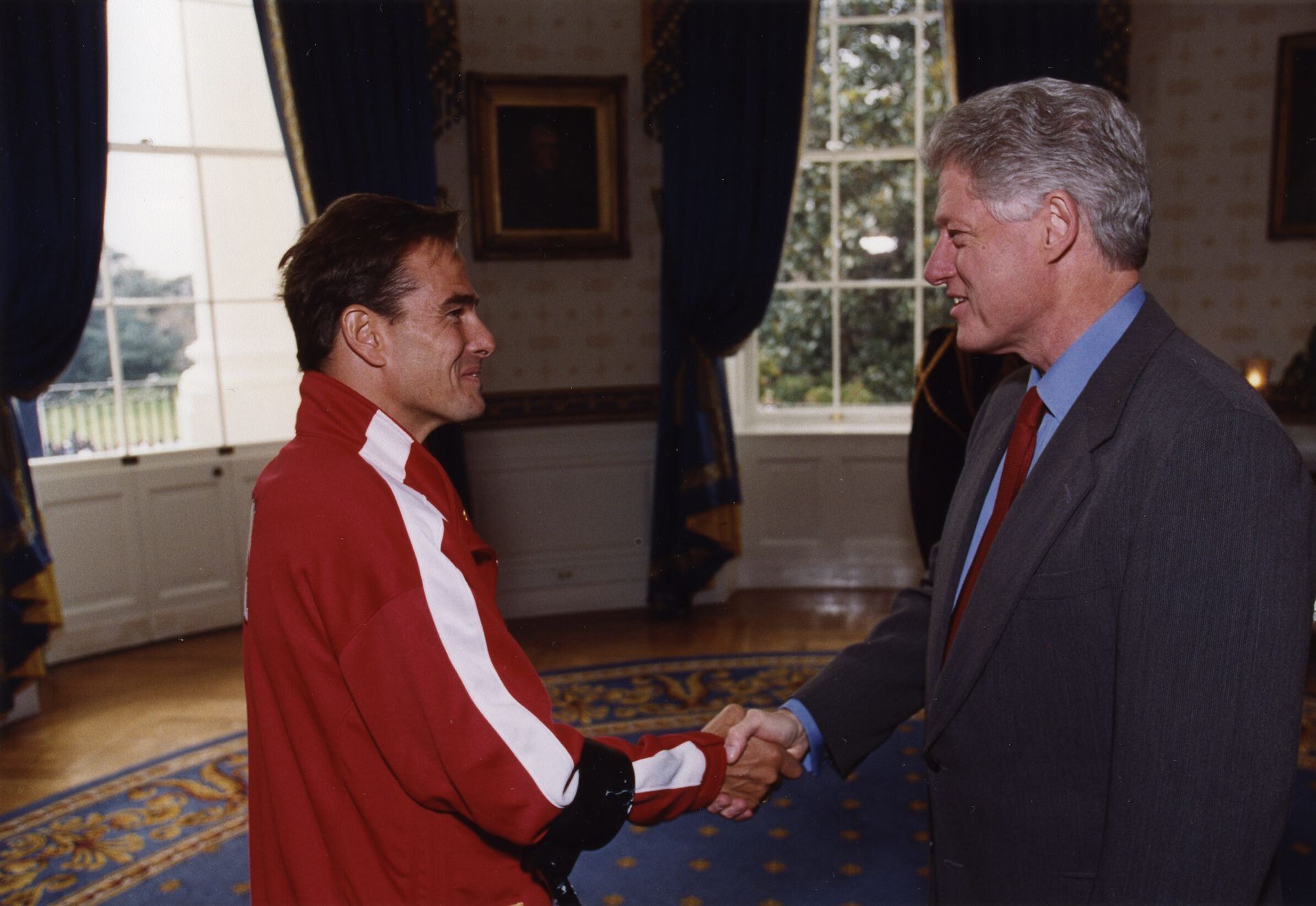
With President Bill Clinton · The White House · 2000
Chapter Three — Going East
"Going without knowing all the answers."
At 24, Gregory moved to Taiwan after declining an offer to work for the Peace Corps in Morocco. He studied Chinese painting and calligraphy with local masters and learned Mandarin. The bold, gestural visual language that would later appear in boardroom-scale commissions for the IOC and the LA28 Olympic Committee was formed in those studios — in Taipei, not in any formal art academy.
Before any of that, he had made a 16-month solo overland journey through China, Tibet, Nepal, India, and Pakistan — with a backpack and on crutches, without an itinerary or reservation. He has spent a lot of his life going before he knew exactly where he was going. It has served him well.
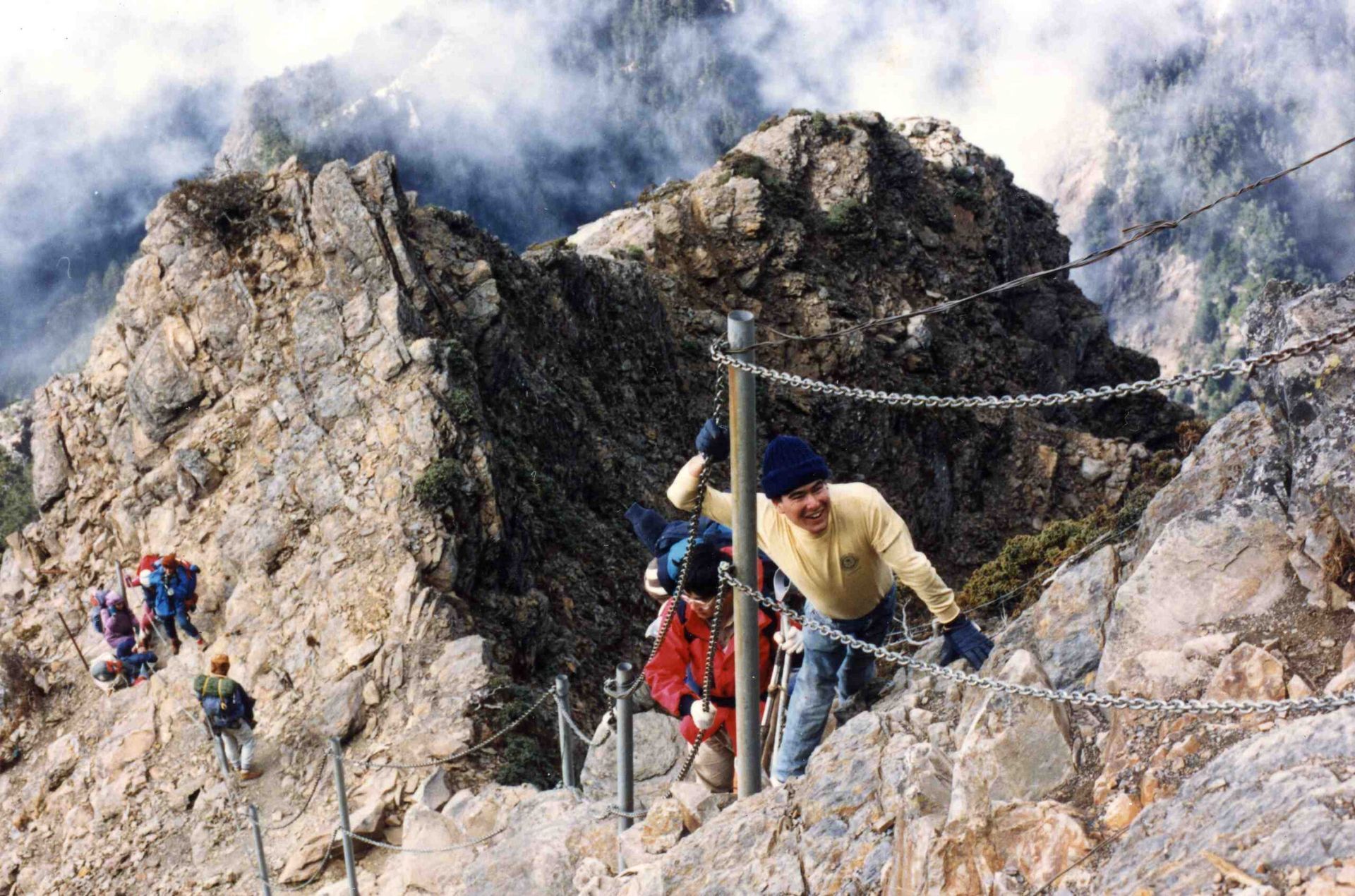
Jade Mountain, Taiwan · 1987 · 4,000 metres
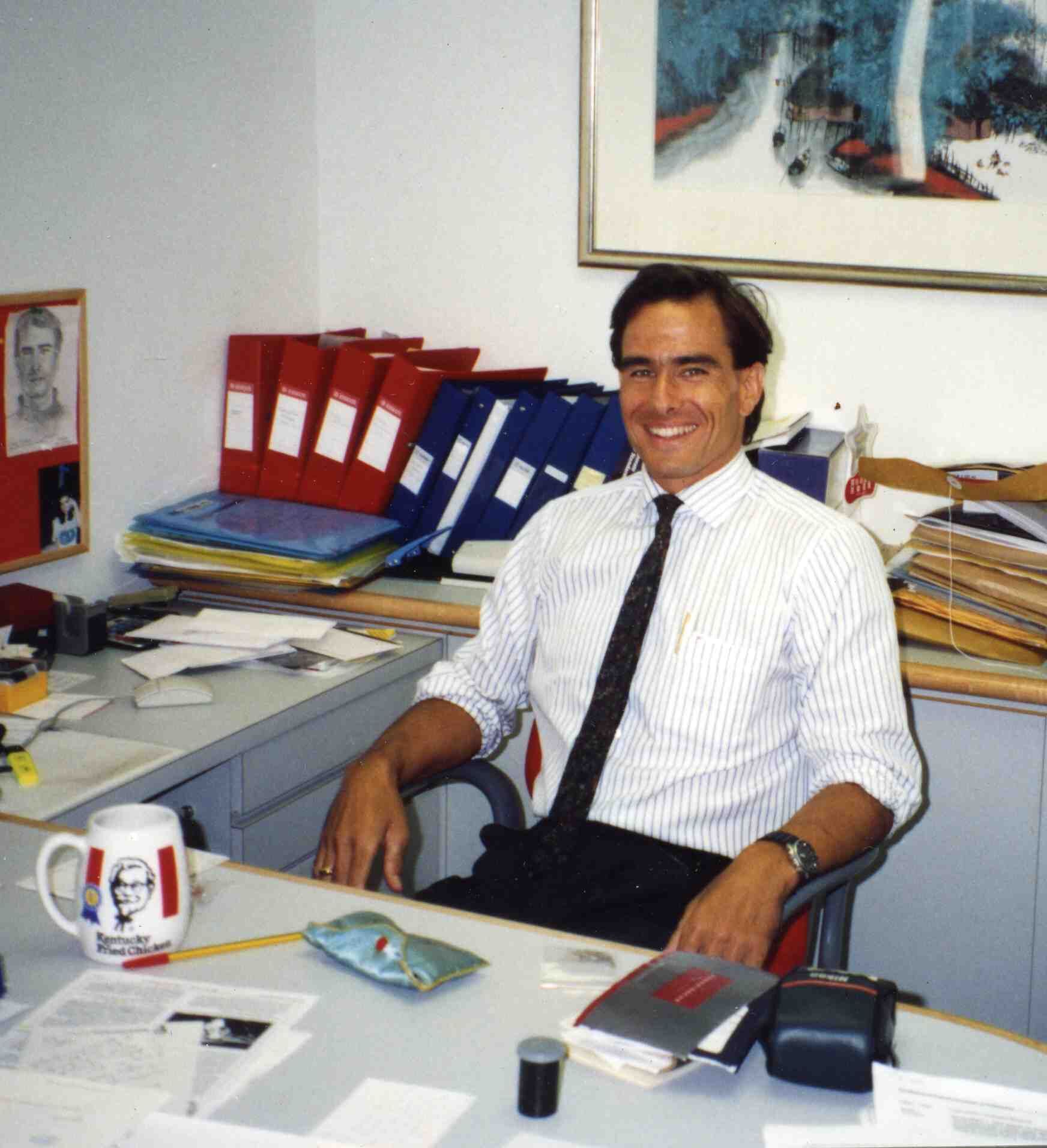
PepsiCo Restaurants International HQ, Hong Kong 1994
Chapter Four — The Pivot
By 1992, Gregory was in Hong Kong — training for the Barcelona Paralympic Games while working two full-time jobs with no sponsor and no safety net. KFC came in. He went to Barcelona, won a silver and a bronze, and came home to a job offer with the Colonel. He took it. After two jobs and full-time swim training, one job felt almost leisurely.
He stayed five years. What the pool and the studio hadn't taught him, corporate life did. He transitioned from backpack to business class and learned how organizations and executives think. Then in 1998, the Asian Economic Crisis hit. At 40, he was out of a job. He calls it the best bad thing that ever happened to him.
Five years inside a global brand had given him the fluency to craft his stories and workshops around the needs of different audiences. Now at 40, he returned to the work he'd been building toward since his first figure drawing classes at university.
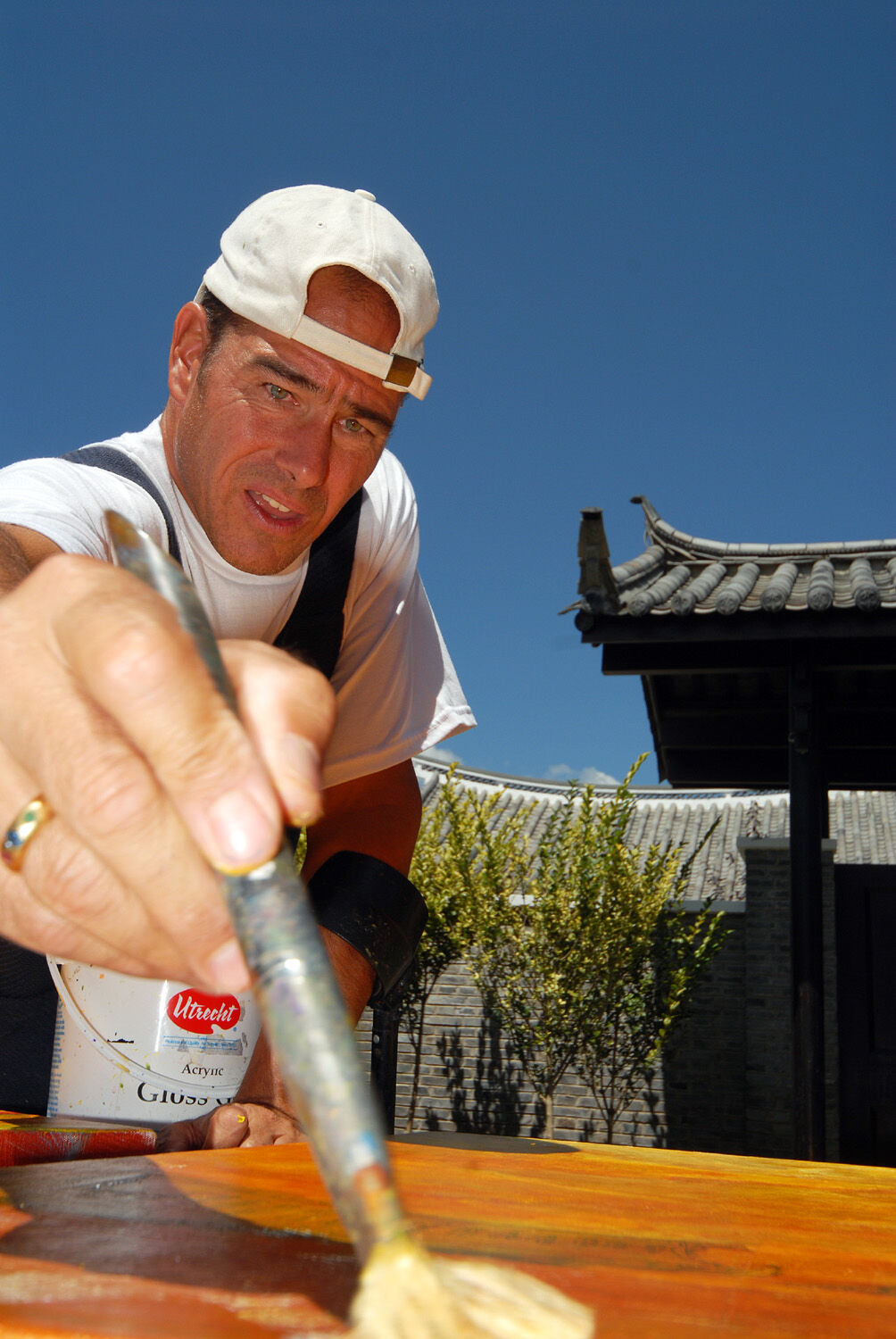
Chapter Five — The Artist & Speaker
Banyan Tree Resort, Lijiang, China · 2006
"In motion I find direction."
Gregory’s art career spans 80 exhibitions across 15 countries, 40 residencies on six continents, and large-scale commissioned works for some of the world’s most recognized institutions. But the numbers don’t carry what painting actually is for Gregory. It is the thread that has run beneath every other chapter: the quiet conversation he has been having with the world since he picked up a brush at six.
On stage, the stories are Gregory’s — but what the audience takes away belongs to them. People don’t need to have swum the Paralympics to recognize what his keynotes are actually about: the moment the plan falls apart, the discipline of showing up when no one is watching, the decision to move before you know the outcome. They leave with something they didn’t arrive with.
Away from the stage, he puts a brush in your hand. For twenty years he has led team art experiences for groups from ten to a thousand — producing large-scale collaborative paintings that now hang in corporate headquarters around the world. The act of making something together — deciding, committing, adjusting, finishing — reveals things about a team that no workshop or offsite agenda quite manages to surface. The largest to date: an 8×48 foot canvas made by 930 Equinix employees in a single hour.
He is quietly funny, and entirely without pretension.
Gregory’s work has been profiled by CNN, BBC, CNBC, ESPN, CNA, CCTV, Time Magazine, and the Asian Wall Street Journal — from features on his Paralympic career to studio profiles on his life as a working artist.
CNN Interview · London & Singapore
Gregory Burns · Introduction
Step by Step · Trailer
In the Studio · VSA Interview
In the Studio · Foxesden Profile
Painting in Shanghai
Giving Back
Beyond galleries and stages, Gregory has spent decades using art as a vehicle for community and compassion — painting murals in disaster-affected towns, mentoring children with disabilities across Asia, and receiving international recognition for his contributions to arts education and humanitarian outreach.
Explore Philanthropy →Works held in permanent museum and institutional collections — earned through commissions, residencies and international exhibition over three decades.
Lausanne · Switzerland
Permanent collection. Athlete’s Journey Tokyo (60×60in, 2022) acquired following Gregory’s commission as Official Artist in Residence at the ‘Thank You Tokyo’ event following the Tokyo 2020 Games.
Daphne, Alabama · United States
Permanent collection. Gregory was named 2016 Sports Artist of the Year by the United States Sports Academy — whose museum, the American Sport Art Museum and Archives, holds his work.
San Diego · California
Large kite painted on Japanese rice paper, specifically designed and executed by Gregory during a live painting demonstration at the museum.
Cupertino · California
De Anza College’s community museum. Works exhibited from Gregory’s California collection.
Miyagi · Japan
Permanent collection. Work acquired from Gregory’s residency program in Japan. Large 4×8ft diptych created with children of Kesennuma city displaced by the tsunami of 2011.
Solo and group exhibitions at landmark cultural institutions across three continents.
Washington D.C. · United States
America’s national cultural center and living memorial to President Kennedy.
Beijing · China
China’s first privately funded contemporary art museum — a landmark of Beijing’s international art scene.
Taipei · Taiwan
One of Taiwan’s most significant national monuments and premier cultural exhibition venues.
Works acquired by private collectors and corporate institutions across four continents.
Bali · Indonesia
35 paintings commissioned for the Four Seasons residences, Bali.
Hong Kong
Work acquired for the Deutsche Bank Hong Kong corporate art collection.
Melbourne · Australia
Work held in the BHP Billiton corporate collection, one of the world’s largest resources companies.
Maximize what you have. One step at a time.