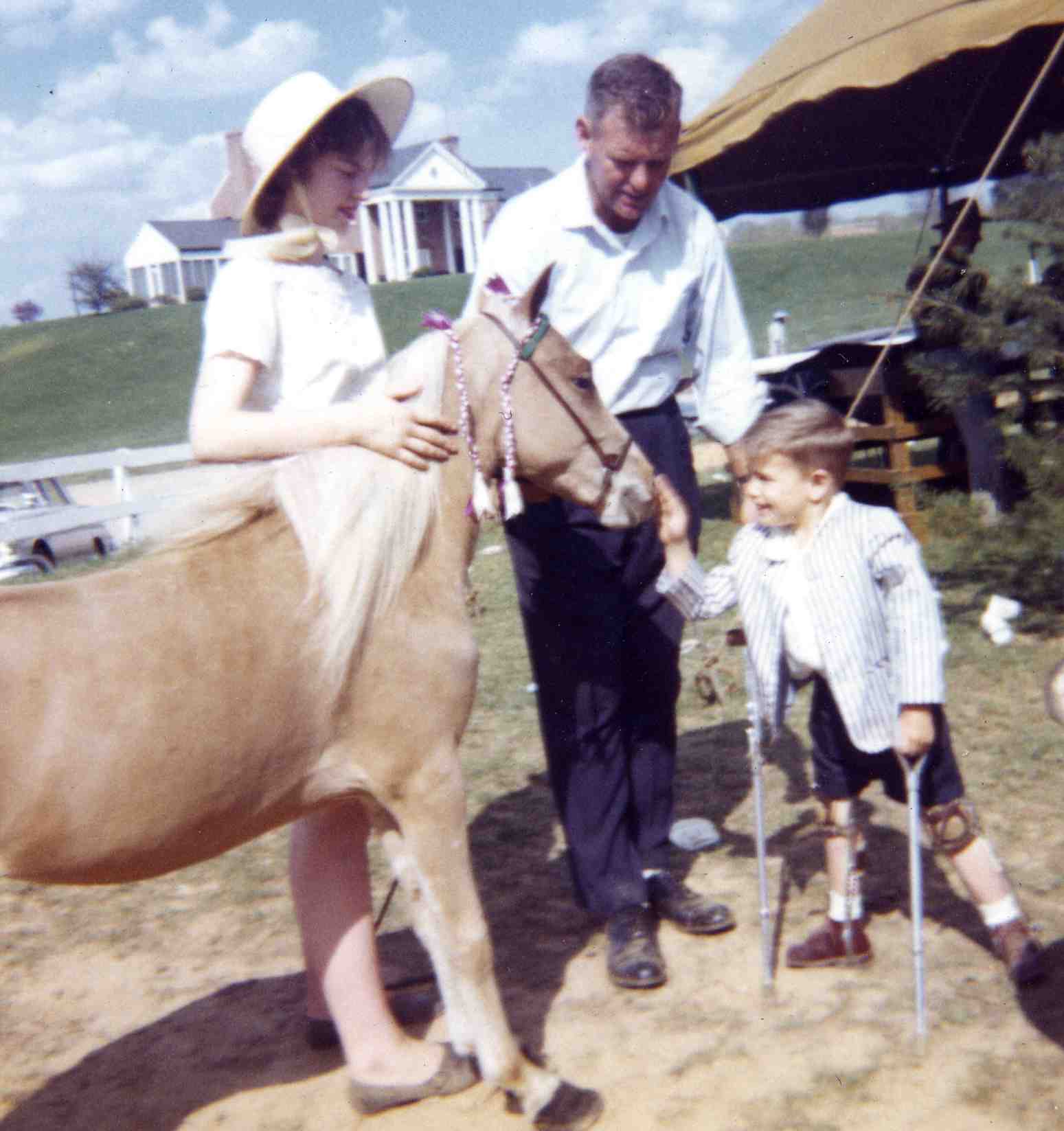
I contracted polio at the age of one in Jerusalem so as a result, I have always moved on arm power alone — with crutches and braces, a hand-cycle or wheelchair, through pools, up mountain trails in Nepal, through a marathon course in Hawaii and across the finish line of an IronMan in Korea. Three Paralympic Games. Five world records. An art career that has taken me to sixty countries.
People hear this and assume I must have had to fight for it. That I must have had to push back against a world that told me I couldn’t.
But here is what I’ve realized after some six decades: nobody ever told me the deck was stacked against me.
Not my parents. Not my coaches. Nobody looked at the boy moving on his arms and said — even quietly, even kindly — that some doors would stay closed. They just pointed at the open ones. More than that: they pushed me toward the difficult ones. The ones that required something.
Entering the workforce, I didn’t realize some folks may not see past the crutches to the potential. But many did. A camp director in California. The manager of a trading company in Taiwan. An HR director in Hong Kong. And all the CEOs of the companies I’ve spoken for who trusted that navigating a disability might teach something about working in the world.
I’ve been thinking about this a lot lately. Because I see the opposite happening all the time. Parents of children with disabilities who are so intent on protecting their child from disappointment that they accidentally build the ceiling themselves. The limitation doesn’t come from the disability. It comes from the story we tell about it.
I am not saying ignore the challenges. Polio and paralysis are real. Accessibility barriers are real. The world is not always set up for people who move differently. I have spent a lifetime navigating that — and I know exactly how much energy it takes.
But there is a difference between acknowledging what’s hard and deciding in advance what’s impossible. That decision — made early, made quietly, by people who love a child and want to spare them pain — can be the most limiting thing that ever happens to them.
My parents made a different call. They fought so I could attend the regular school. They treated the crutches as equipment, not as identity. They got me a skateboard which I would sit cross-legged on and push with my hands. They gave me a go-kart for Christmas so I could ride trails with my friends on their mini-bikes. They found an old man in The Hague who converted our stick shift VW Beetle so that I could operate it with hand controls and then they sent me off to college. They didn’t look past the disability — but they never let it be the last word.
What I have is not an absence of obstacles. It is an absence of a predetermined ceiling.
I want to start speaking to parents. Parents sitting across from a diagnosis and a future they hadn’t planned for, trying to figure out what to do next. What I want to tell them is simple: there is no play book but be careful what stories you tell. Be careful who gets to define what your child’s life will look like. The medical establishment will give you limitations. The world will offer you its assumptions. You don’t have to accept either as the final answer.
Challenge your child. Expect something from them. Let them fall and fail. Let them try again. And again. The moments when Gregory-the-five-year-old was expected to do what every other kid did — that expectation was not cruelty. It was a gift.
Nobody told me I couldn’t. Nobody said the world was stacked against me. That silence made me everything.